
How Land Stewardship Helps Protect Water During the Winter Months

As winter approaches and the landscape begins to quiet, it’s easy to assume that our lands — and our watersheds — are resting until spring. But in reality, winter is one of the most important seasons for protecting water quality, supporting groundwater recharge, and setting up healthy growing conditions for the year ahead. The way we manage land in these colder months has a direct impact on the streams, springs, and aquifers we rely on every day.
At the Oka’ Institute, we work with landowners, prescribed burn associations, tribal partners, and conservation leaders across the region to promote stewardship practices that support both land and water. Here’s how winter land management plays a key role in protecting our water resources.
1. Winter Vegetation Management Protects Streams From Erosion
When grasses go dormant and tree leaves fall, soil is more exposed — especially after heavy rains or freeze-thaw cycles. Winter is a critical time for maintaining dense vegetation, particularly in riparian areas.
Good winter management can help:
Reduce sediment entering creeks and streams
Stabilize streambanks
Improve infiltration and groundwater recharge
Prevent nutrient runoff into waterbodies
Even simple steps — like maintaining buffer strips, controlling bare areas, or delaying heavy equipment use near waterways — can make a meaningful difference.
2. Prescribed Burn Planning Supports Long-Term Watershed Health
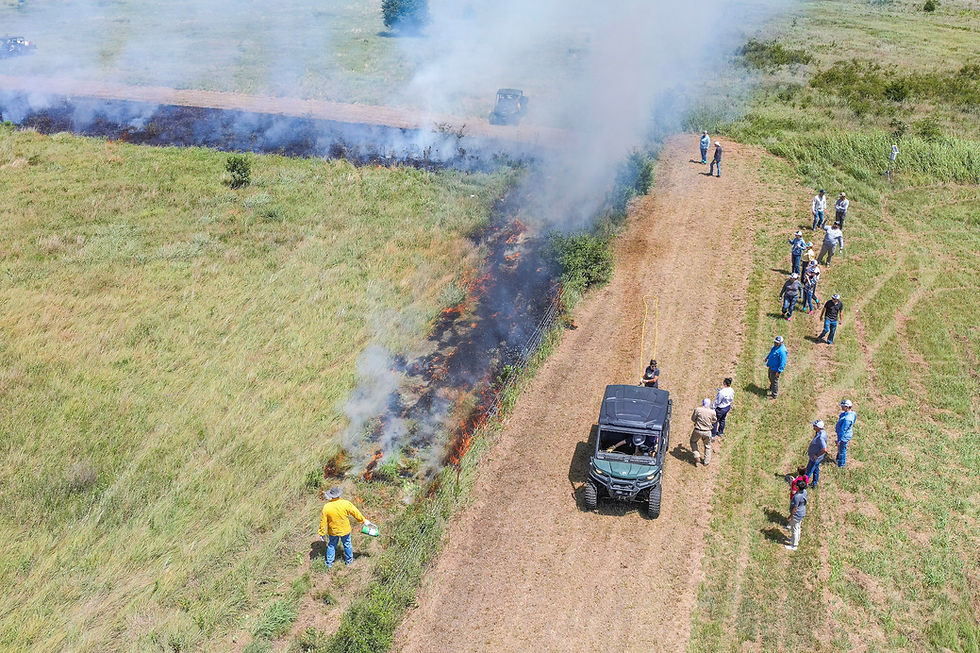
Winter is the season when Oklahoma landowners and Prescribed Burn Associations begin preparing firebreaks and developing burn plans for early spring. While prescribed fire is often recognized for improving grazing lands and reducing wildfire risk, its benefits extend beyond the surface.
Well-managed prescribed burning can:
Open up landscapes and improve rainfall infiltration
Reduce woody encroachment that competes for water
Improve soil health and nutrient cycling
Promote healthier native grasses that stabilize soil year-round
This work ultimately reduces erosion and enhances watershed function — especially in regions like the Arbuckle Simpson Aquifer and Blue River watersheds.
3. Healthy Winter Soil Supports Clean Water Year-Round
Soils with strong organic matter, stable rooting systems, and good cover during the winter months allow more water to sink into the ground rather than running off the surface. This supports aquifer recharge and improves water quality.
Winter stewardship practices that help include:
Managed grazing
Cover crops in agricultural areas
Leaving sufficient grass height going into dormancy
Protecting sensitive slopes and drainage areas
Healthy soils absorb water like a sponge — reducing flash runoff and keeping streams clearer.
4. Winter Is the Best Time to Assess Land for Spring Projects
For many landowners, winter provides a clearer view of the land’s structure. With vegetation thinned and tree canopies open, it becomes easier to see:
Erosion channels
Woody encroachment
Bare patches in need of reseeding
Damaged riparian corridors
Seasonal wetlands and water flow patterns
This makes winter a prime time to plan spring restoration projects, from native grass plantings to riparian fencing and brush management.
5. Stewardship During Dormant Months Pays Off in Spring
What happens on the land in winter sets the tone for how water moves across the landscape in spring. Good winter management helps communities:
Maintain healthier streams
Improve spring flows
Enhance water quality
Reduce infrastructure strain
Strengthen watershed resilience
This is especially important in the Arbuckle-Simpson region, where groundwater recharge plays a critical role in local water supply.
Working Together for Healthy Land and Water
Sustainable watersheds don’t start in spring — they start in winter. Landowners who steward their property during dormant months play a pivotal role in protecting water quality and supporting long-term resilience across Oklahoma.
At the Oka’ Institute, we’re proud to work alongside landowners, PBAs, tribal nations, and conservation partners who understand the connection between healthy land and healthy water.
If you’re interested in learning more about winter stewardship or watershed projects in your area, our team is always here to help.


Comments